
Complete Beginner’s Guide to Building Your First Workout Program
Building your first workout program feels overwhelming at first. Countless exercise routines flood the internet every single day. Beginners often get confused by conflicting fitness advice.You do not need complex training methods to build strength. Simple workout plans yield incredible results for beginners. A well-structured routine helps you build muscle, lose fat, and boost daily energy.This complete guide teaches you how to construct your own training routine. You will master basic movements, set proper training volume, and track your progress efficiently.Starting your fitness journey requires clarity and consistency.
Understanding basic training principles keeps you safe and highly motivated. Let us build a reliable workout program tailored to your personal goals.Every journey begins with a clear plan. Having a written schedule prevents wasted effort inside the gym environment. Let us examine the exact steps needed to transform your fitness levels today.
Defining Your Core Fitness Goals
Clear goals dictate every single detail of your training routine. You must identify what you want to achieve before lifting any weight.
Training for Fat Loss
Fat loss requires a high activity level alongside proper nutrition. Workouts should focus on burning energy while preserving lean muscle mass.
Training for Muscle Growth
Building muscle requires progressive overload and sufficient resistance. You must challenge your muscles consistently to trigger growth over time.
| Primary Goal | Main Focus Area | Recommended Rep Range | Rest Period Between Sets |
| Fat Loss | High movement volume and heart rate | 10 to 15 reps | 45 to 60 seconds |
| Muscle Growth | Controlled tension and progressive load | 8 to 12 reps | 60 to 90 seconds |
| Strength Gain | Heavy weights and compound lifts | 3 to 6 reps | 2 to 3 minutes |
| General Fitness | Balanced movement and endurance | 10 to 12 reps | 60 seconds |
Selecting a clear direction saves you months of trial and error. Aligning your exercises with your goals ensures rapid physical progress.
Choosing the Best Workout Split for Beginners
A workout split determines how you divide training days throughout the week. Beginners respond exceptionally well to simple schedules.
Full body routines work best for people starting their journey. You train every major muscle group three times per week. This approach maximizes movement practice without causing severe recovery fatigue.Alternatively, an upper and lower body split offers great flexibility. You train upper body muscles on one day and lower body muscles on the next.
| Workout Split | Weekly Frequency | Best For | Recovery Time |
| Full Body | 3 days per week | Complete beginners | High recovery between sessions |
| Upper / Lower | 4 days per week | Intermediate beginners | Moderate recovery window |
| Push / Pull / Legs | 3 to 6 days per week | Experienced lifters | Lower per-muscle recovery time |
Pick a schedule that fits smoothly into your weekly lifestyle. Consistency matters far more than choosing a fancy advanced routine.

Mastering Fundamental Compound Movements
Compound movements train multiple joints and muscle groups simultaneously. These exercises deliver the highest return on your investment of time and energy.
- Squats build powerful legs, hips, and core stability.
- Deadlifts strengthen your entire posterior chain and back muscles.
- Push-ups and bench presses develop chest, shoulders, and triceps.
- Rows and pull-downs build a strong, balanced upper back.
- Overhead presses construct strong shoulders and core control.
Mastering compound movements builds a solid functional foundation. These lifts trigger maximum muscle activation and burn significant calories.
Focus heavily on proper technique before adding heavy weight to the bar. Good form prevents injuries and ensures long term muscle development.
Understanding Sets, Reps, and Rest Intervals
Sets represent the total number of exercise rounds you perform. Reps, short for repetitions, count how many times you repeat a movement within a set.A standard starting point for beginners is three sets per exercise. You can perform eight to twelve reps per set for optimal muscle growth.Rest intervals allow your energy systems to recover between sets. Taking proper rest periods ensures high performance during every set.
- Short rest periods keep your heart rate elevated for endurance benefits.
- Longer rest periods allow maximal strength effort on heavy compound movements.
- Mid-range rest periods balance muscle fatigue with cardiovascular demand.
- Consistent rest timing keeps your workouts organized and predictable.
Proper structure keeps your workouts efficient and focused. You avoid wasting valuable time and maintain consistent physical effort throughout your session.
Selecting Proper Weights and Managing Effort
Choosing the right starting weight keeps you safe while driving progress. Beginners should start lighter than they think necessary.
Select a weight that allows you to complete target reps with proper form. The last two reps of every set should feel challenging yet clean.
Avoid lifting to complete failure during your first few weeks. Leaving one or two reps in reserve prevents extreme soreness and injury.
- Start every new movement with light warm-up sets.
- Increase resistance only when technical execution remains flawless.
- Record your starting weights in a digital or paper journal.
- Lower the weight immediately if your posture begins to break down.
Gradually increase resistance as your body adapts to the movement patterns. Small, steady increases in weight compound into massive long term gains.
Respect your body’s current capabilities during every workout. Pushing past proper technical execution invites unnecessary physical injury and setbacks.
Implementing Progressive Overload for Results
Progressive overload is the fundamental driver of muscle growth and strength gains. You must challenge your body progressively over time to force adaptations.
Increasing Resistance
Add small amounts of weight to your exercises when reps become easy. Even adding two pounds to a lift forces fresh adaptation.
Increasing Volume
Perform more reps or additional sets with the same weight. Completing ten reps instead of eight builds extra work capacity.
| Progress Method | How to Apply It | Primary Benefit |
| Weight Increase | Add 2.5 to 5 pounds to the bar | Directly increases physical strength |
| Rep Increase | Perform 1 to 2 additional reps per set | Improves local muscle endurance |
| Set Increase | Add 1 extra set to an exercise | Drives higher overall training volume |
| Rest Reduction | Cut rest times by 10 to 15 seconds | Enhances cardiovascular efficiency |
Consistently tracking your metrics guarantees continuous physical progression. Small incremental improvements lead to noticeable structural transformations.
Balancing Push and Pull Movements
A balanced routine prevents posture issues and joint imbalances. You must balance pressing exercises with pulling movements equally.Many beginners focus excessively on pressing exercises like bench presses and push-ups. Neglecting pulling exercises creates rounded shoulders and weak back muscles.
- Match every chest press with an upper back row exercise.
- Match every overhead press with a pull-down or pull-up movement.
- Match quad-dominant squats with hamstring-dominant deadlifts or leg curls.
- Include rotator cuff mobility exercises to protect your shoulder joints.
Balanced routine design protects your joints from chronic overuse injuries. You develop a symmetrical, functional body that moves gracefully.Prioritizing balanced movement keeps your body healthy for decades of lifting. Smart selection prevents structural imbalances before they ever start.
Incorporating Proper Warm-Ups and Cool-Downs
Never skip your warm-up routine before lifting weights. Proper warm-ups prepare your nervous system, joints, and muscles for intense work.
Begin with five minutes of light cardio to elevate core body temperature. Walking, light jogging, or cycling works exceptionally well.Perform dynamic stretches to improve joint mobility before your workout. Arm circles, leg swings, and bodyweight squats prime your body for loading.Cool down after your workout with five minutes of gentle static stretching. Stretching post-workout relaxes tight muscles and initiates early physical recovery.Investing ten minutes in warming up drastically reduces your injury risk. You perform better during your main lifts with warm, mobile joints.
A solid warm-up routine primes your mind alongside your body. Transitioning smoothly into your workout improves total mental focus.
Structuring Your Weekly Workout Schedule
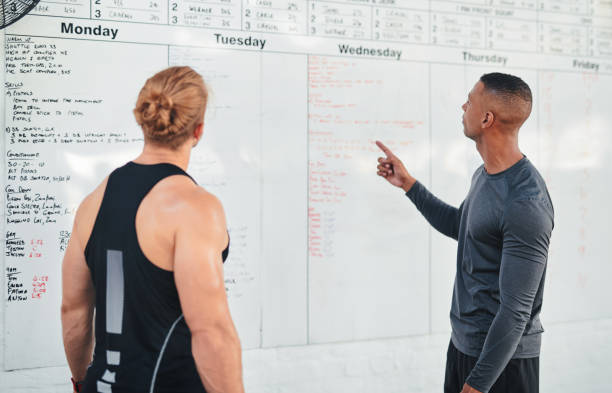
A structured schedule prevents missed workouts and ensures proper recovery days. Consistency relies heavily on clear scheduling.A classic three-day full body split works smoothly on Monday, Wednesday, and Friday. You take full rest days on Tuesday, Thursday, and weekends.Alternatively, an upper/lower split functions well on Monday, Tuesday, Thursday, and Friday. Wednesday and weekends serve as dedicated recovery days.Plan your workouts around your current lifestyle and work obligations. Choose a schedule that you can stick to consistently for months.Rest days are just as important as active training days for building muscle. Your body grows and adapts while resting, not while actively lifting.Proper planning minimizes schedule conflicts and excuses. Treat your scheduled workouts like essential personal appointments.
Managing Recovery, Sleep, and Nutrition
Workouts provide the physical stimulus, but proper recovery creates actual results. Nutrition and sleep drive tissue repair and energy restoration.
Fueling Muscle Growth
Eat adequate protein to repair muscle tissue damaged during workouts. Aim for lean meats, eggs, fish, and plant-based protein sources daily.
Hydration and Sleep
Drink plenty of water to maintain muscle function and performance. Sleep seven to nine hours every night to optimize natural recovery hormones.
Without sufficient sleep, your performance drops and injury risks skyrocket. Treat recovery as an essential component of your workout routine.
Proper nutrition gives your body the raw building blocks required for repair. Quality food fuels intense workouts and reduces post-exercise muscle soreness.
Consistently resting protects your nervous system from chronic fatigue. High quality sleep unlocks maximum energy during every training session.
Tracking Your Training Progress Accurately
You cannot improve what you fail to measure over time. Keeping a detailed workout log keeps you accountable and shows real progress.
- Record every exercise, weight lifted, and completed reps daily.
- Note how difficult specific sets felt during your training session.
- Track body measurements, photos, and strength increases weekly.
- Review your log regularly to ensure progressive overload continues steadily.
A workout journal provides undeniable proof of your physical improvements. Looking back at past logs boosts confidence on days when motivation feels low.
Tracking helps you identify plateau trends before they stall your progress completely. You can make informed adjustments to your program based on accurate historical data.
Consistent records eliminate guessing games inside the gym environment. You know precisely what weights to select before starting any set.
Avoiding Common Beginner Fitness Mistakes
Beginners often fall into predictable traps that delay results. Recognizing these mistakes saves you time, frustration, and potential injuries.
Do not switch your workout program every single week. Changing routines constantly prevents you from mastering exercises and building strength.Avoid lifting weights that are too heavy for your current ability. Egotistical lifting destroys form and leads straight to painful physical injuries.
Do not ignore painful joint warnings during exercise performance. Sharp pain signals injury, whereas muscle burning simply signals temporary physical fatigue.Consistency trumps intensity every single time for beginners. Showing up regularly delivers far better results than occasional extreme effort.Patience remains your ultimate asset throughout this fitness journey. Trusting the process ensures safe, sustainable physical growth over time.
Sample 3-Day Full Body Beginner Program
This sample routine provides a completely balanced starting point for beginners. Alternate between Workout A and Workout B across three non-consecutive days weekly.
Workout A Structure
- Goblet Squats: 3 sets of 10 to 12 reps
- Dumbbell Bench Press: 3 sets of 10 to 12 reps
- Dumbbell Bent-Over Rows: 3 sets of 10 to 12 reps
- Dumbbell Overhead Press: 3 sets of 10 to 12 reps
- Plank Hold: 3 sets of 30 to 45 seconds
Workout B Structure
- Romanian Deadlifts: 3 sets of 10 to 12 reps
- Lat Pull-Downs or Inverted Rows: 3 sets of 10 to 12 reps
- Push-Ups: 3 sets of as many clean reps as possible
- Dumbbell Lunge Steps: 3 sets of 10 reps per leg
- Hanging Knee Raises: 3 sets of 12 to 15 reps
Rest for 60 to 90 seconds between every set. Increase weight slightly once you complete all reps across all sets easily.
This simple layout eliminates guesswork during your first weeks. Stick to these core movements until your strength foundation becomes rock solid.
Adapting Your Program as You Advance
Your body adapts to stress over several months of consistent lifting. Eventually, your beginner program will require modifications to keep driving progress.
Deload every eight to twelve weeks by reducing weights and total volume by half. Deload weeks allow joints, tendons, and nervous systems to fully recharge.
When progress stalls completely, consider switching to an upper and lower split schedule. Adding fresh exercise variations stimulates new muscle growth and movement skills.
Increase your training volume gradually as your physical capacity expands over time. Advanced trainees require higher stimulus to force ongoing adaptations.Listen closely to physical feedback to determine when changes become necessary. Smart adaptations ensure continuous, lifelong gains in health and fitness.Evolving your routine keeps your workouts fresh and engaging. Fresh challenges prevent boredom and spark new waves of personal progress.
Conclusion
Building your first workout program does not require complex science or confusing split routines. Focus on fundamental compound exercises, balanced movements, and consistent progressive overload. Establish a manageable schedule that fits your daily lifestyle without causing extreme physical exhaustion.
Prioritize proper movement technique over heavy weights to keep your joints safe. Pair your physical training with nutrient-dense foods, adequate hydration, and quality overnight sleep. Your physical results reflect the quality of your recovery just as much as your effort in the gym.
Start today with a simple three-day full body routine. Log your exercises, track your weights, and stay patient as your body adapts over time. Consistency, patience, and smart training principles will transform your health, strength, and overall physical performance for life.
Frequently Asked Questions
How long should a beginner workout session last?
A beginner workout should last between 45 and 60 minutes. This provides plenty of time for warm-ups, main exercises, and adequate rest periods.
Can I build muscle using only bodyweight exercises?
Yes, bodyweight exercises like push-ups, pull-ups, and squats build impressive strength. You can increase difficulty by modifying leverage and adding total reps.
How many days per week should a beginner train?
Beginners achieve fantastic results training three non-consecutive days per week. This schedule provides ideal balance between training stimulus and full recovery time.
Should I do cardio before or after lifting weights?
Perform lifting sessions first when energy levels are highest. Do cardio after weight training or on separate dedicated rest days to optimize lifting performance.
What should I do if I feel extremely sore after a workout?
Delayed onset muscle soreness is completely normal for beginners. Perform light walking, dynamic stretching, stay hydrated, and ensure high quality sleep to recover faster.
How quickly will I see results from my new workout routine?
Noticeable strength gains often occur within two to three weeks. Visible physical changes in muscle shape and body composition typically appear after eight to twelve weeks.
Is it necessary to use gym machines or are free weights better?
Both free weights and machines offer valuable benefits. Free weights build balance and stabilizing muscles, while machines provide safe, controlled exercise environments.
What should I eat before starting a strength workout?
Eat a light meal containing complex carbohydrates and protein 1 to 2 hours before training. Oatmeal, bananas, eggs, or a protein shake provide sustained workout energy.
How do I know when it is time to increase the weight?
Increase resistance when you can complete all prescribed sets and reps with clean form easily. Add small weight increments to maintain safe steady progress.
Discover more from Muscle Archive
Subscribe to get the latest posts sent to your email.